


Inspiration, Products & Formats
The Power of Putting Pen to Paper: Benefits of Writing by Hand
Oct
From clearing your mind to remembering the little things, putting pen to paper can do wonders for your everyday life. Discover why writing by hand is worth making time for, even in a world full of screens.
When was the last time you picked up a pen and wrote something just for yourself? Not a quick shopping list or a rushed signature, but something that made you stop, think and enjoy the moment.
With phones, laptops and endless notifications taking over our daily routines, good old-fashioned handwriting can feel like a forgotten art.
But the benefits of writing by hand go far beyond having a pretty notebook. From helping you organise your thoughts to supporting memory, creativity and emotional wellbeing, putting pen to paper is a simple habit with plenty to offer.
And the best part? You don’t need to be a brilliant writer to enjoy it.
1. The Psychological Benefits of Writing by Hand
There’s something wonderfully satisfying about getting your thoughts out of your head and onto a page.
Whether you’re writing a journal, scribbling down ideas or making a good old-fashioned to-do list, handwriting gives you a chance to slow down and focus on what’s happening in your mind.
Can writing by hand improve your mental wellbeing?
Yes, writing by hand can support mental wellbeing by helping you process emotions, organise your thoughts and reflect on your experiences.
Some of the potential psychological benefits of writing include:
- Less mental clutter: Writing down worries or unfinished tasks can make them feel easier to manage.
- Better emotional awareness: Journalling encourages you to recognise how you’re feeling and why.
- A moment of calm: Taking time away from screens can create a welcome pause in a busy day.
- Greater self-reflection: Looking back at previous entries can help you notice patterns, progress and personal growth.
Research into expressive writing suggests that reflecting on emotions through writing can benefit some people’s wellbeing, although results vary and handwriting itself isn’t a guaranteed stress reliever.
Think of your notebook as a little space that’s entirely yours. No notifications, no judgement and definitely no autocorrect changing what you meant to say.
2. Does Writing Things Down Help You Remember?
Yes, writing things down can help you remember information, particularly when you’re actively thinking about what you’re writing rather than simply copying it.
When you write by hand, you often need to slow down, select the important information and put it into your own words.
That extra processing can make information more meaningful and easier to recall.
Is writing things down better than typing?
Sometimes! Research comparing handwritten and typed notes suggests that handwriting can encourage deeper processing, particularly when you’re summarising information in your own words.
Typing is brilliant for speed, but it’s also easy to record everything without really thinking about it.
Handwriting encourages you to be a little more selective.
Try using handwritten notes for:
- Revising important information before an exam.
- Remembering ideas from meetings.
- Planning projects and personal goals.
- Keeping track of appointments and reminders.
- Recording moments you don’t want to forget.
Of course, the way you take notes matters too. Thoughtful typing can be just as useful, and handwriting isn’t automatically better for everyone.
The trick is finding a method that helps you engage with what you’re learning.
3. Why Writing Daily Can Make a Difference
You don’t need to fill pages and pages to enjoy the benefits of writing daily.
Even five minutes with a pen and notebook can give you an opportunity to check in with yourself.
The benefits of keeping a journal
Journalling is one of the easiest ways to introduce handwriting into your routine.
It gives you somewhere to record your thoughts, celebrate small wins and make sense of everything happening in your day.
Not sure what to write? Start with these simple prompts:
- What’s one thing that made me smile today?
- What am I looking forward to this week?
- What’s been on my mind lately?
- What am I grateful for right now?
- What’s one thing I’d like to achieve tomorrow?
There’s no right or wrong way to journal. Some days you’ll write a whole page. Other days, one sentence will do.
And if your handwriting looks like a spider has walked across the page? That’s absolutely fine too.
The important thing is making the habit work for you.
4. Can Writing Things Down Help You Focus?
Yes, writing things down can help you focus by giving your thoughts a clear place to go and reducing the need to keep everything in your head.
When you’re juggling work, family, appointments and a never-ending mental to-do list, it’s easy to feel overwhelmed.
Writing can help turn that jumble of thoughts into something more manageable.
Try a daily brain dump
A brain dump is exactly what it sounds like.
Grab a notebook and write down everything that’s occupying your mind. Tasks, ideas, reminders, worries, random thoughts about what to have for dinner. Everything counts.
Once it’s on paper, you can:
- Highlight anything that needs your attention.
- Separate urgent tasks from things that can wait.
- Choose your top three priorities.
- Leave the rest for another day.
It’s a simple way to bring a little order to a busy mind.
And there’s something particularly satisfying about physically ticking a task off your list.
5. The Benefits of Writing Down Your Goals
Big dreams are exciting, but they can also feel a little overwhelming.
Writing your goals down can help turn those vague ideas into something clearer and more actionable.
Instead of thinking, “I’d love to get more organised”, try writing:
“I’m going to spend ten minutes planning my week every Sunday evening.”
See the difference?
One is a nice idea. The other gives you something specific to work towards.
How to make goal writing a habit
Start by choosing a goal that matters to you.
Then use your notebook to:
- Write down what you want to achieve.
- Break your goal into smaller, realistic steps.
- Set yourself a manageable timeframe.
- Record your progress along the way.
- Celebrate the little victories.
Writing goals doesn’t magically make them happen, but it can help you clarify your intentions and keep your next steps visible.
For anyone who loves a little structure, a notebook with planner-style pages can make keeping track of goals and daily priorities even easier.
LINK: Explore Personalised Notebooks
6. Writing as a Hobby: Creativity Without the Pressure
Not everything you write needs to be productive.
Sometimes, putting pen to paper is simply about having fun.
Writing as a hobby gives you space to explore ideas, express yourself and enjoy a little creativity without worrying about deadlines or expectations.
You could try:
- Creative writing: Make up stories, poems or characters.
- Memory keeping: Record funny conversations, favourite days or meaningful moments.
- Gratitude journalling: Write down the little things that make life lovely.
- Freewriting: Set a timer for five minutes and write whatever comes to mind.
- Bullet journalling: Combine lists, notes, doodles and personal organisation.
You don’t need expensive equipment or a perfectly organised desk.
Just a pen, some paper and a little curiosity.
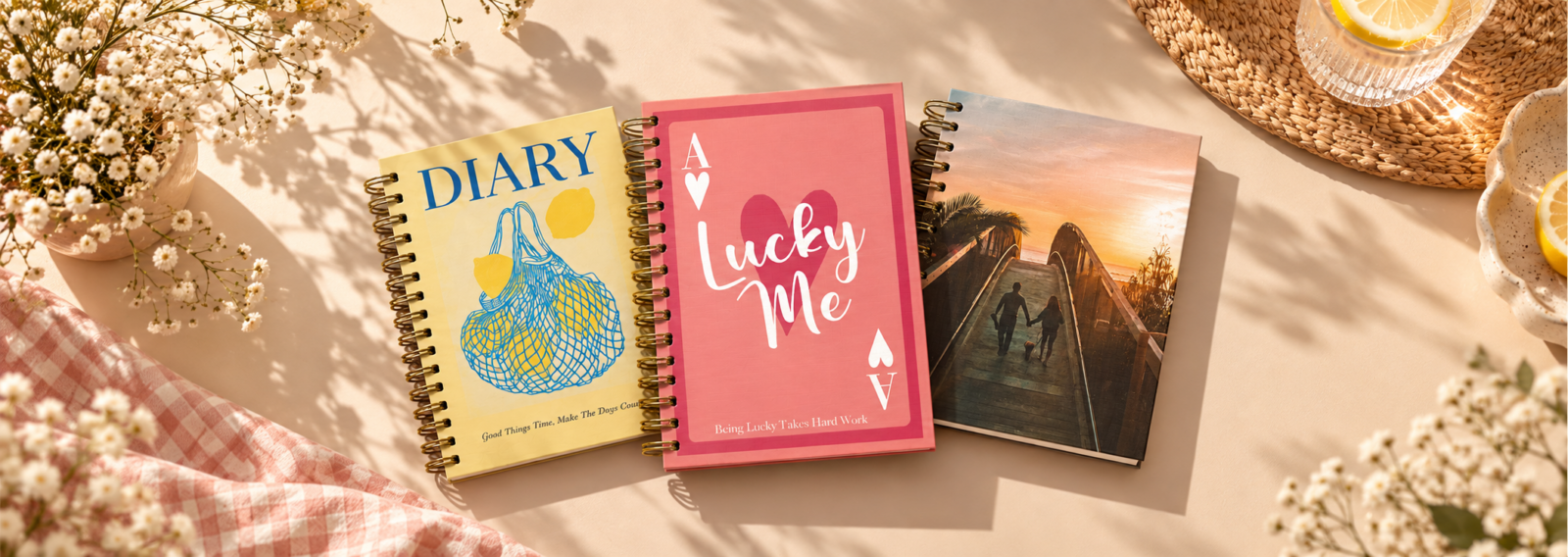
And if you want a notebook that feels a bit more you, Photobubble’s personalised notebook designs let you put your own stamp on the cover.
Choose a design that makes you smile, personalise it with your name, a favourite photo or a meaningful message where available, and give your ideas somewhere lovely to live.
LINK: Create Your Own Notebook
7. How to Start Writing by Hand Every Day
Ready to rediscover the joy of handwriting?
The good news is that starting couldn’t be simpler.
Make it easy and enjoyable
Start small. Five minutes a day is plenty. You can always write more when inspiration strikes.
Keep your notebook nearby. Leave it beside your bed, on your desk or somewhere you’ll naturally reach for it.
Choose a time that suits you. Morning journalling can help you plan your day, while evening writing offers a chance to reflect.
Forget perfection. Crossed-out words, messy handwriting and unfinished sentences are all part of the process.
Make it personal. A notebook you genuinely enjoy using can make sitting down to write feel like a little treat.
Photobubble offers personalised notebooks with different cover designs and a choice of lined, plain or planner-style pages, so you can choose a format that suits how you like to write.

Whether you’re a list-maker, a dreamer, a doodler or a little bit of everything, there’s room for your own writing style.
8. Why Putting Pen to Paper Still Matters
Technology makes our lives easier in countless ways. But sometimes, the simplest things are worth holding on to.
Writing by hand gives you a chance to slow down, connect with your thoughts and create something tangible.
It can support learning, encourage reflection, help you organise your day and give your creativity a place to flourish.
And perhaps that’s the real power of putting pen to paper.
It’s not about perfect handwriting or filling an entire journal. It’s about taking a few moments for yourself and seeing where your thoughts take you.
So grab your favourite pen, open a fresh page and start writing.
You never know what might come out.
SHOP THE COLLECTION
Your Next Great Idea Starts With a Notebook
Ready to put pen to paper? From daily journalling to big dreams and little reminders, discover Photobubble’s personalised notebooks and find a writing companion that’s every bit as unique as you are.
PRODUCTS:
Full Photo Personalised Hardback Notebook – Ruled, Plain or Planner

Personalise the cover with a favourite photograph and create a meaningful place for your daily thoughts, memories and reflections.
Photo Strip Personalised Hardback Notebook – Ruled, Plain or Planner

Lucky Me Personalised Hardback Notebook – Ruled, Plain or Planner

A cheerful, customisable notebook that’s perfect for gratitude journalling, positive affirmations and everyday inspiration.
LINK: Shop the Notebook Collection